
claire saffitz croissant recipe is what I reach for when I want that real bakery feeling at home, but I also want someone to hold my hand through the tricky parts. If you have ever pulled a sad, bready crescent out of the oven and thought, “So this is why people pay five dollars for one,” you are not alone. Croissants look fancy, but the process is mostly about patience, temperature, and a few small habits that make a huge difference. I am going to walk you through how I make them, what I watch for, and what I do when things start to go sideways. You can absolutely do this in your own kitchen, even if your counters are tiny and your fridge is packed.

Get expert guidance from a pastry chef
I like following Claire because she explains the “why” without making you feel like you need pastry school first. The claire saffitz croissant recipe is very step by step, and that matters with croissants because the dough has a mood. One day it rolls like a dream, the next day it fights you like it has plans. Having a clear roadmap keeps you calm.
Here is what I take from her approach, in plain language:
- Measure carefully. This is not the time for random scoops of flour.
- Keep notes. Your kitchen temperature matters more than you think.
- Slow down. Rushing the butter or the proofing is the fastest way to lose those flaky layers.
Also, because croissants and coffee are basically best friends, I always plan a little treat moment while they bake. If you like that cozy weekend vibe too, my go to pairing is something from this list of homemade coffee recipes. It makes the whole thing feel like a mini vacation in your own kitchen.
One more thing I appreciate is that Claire’s method feels realistic for a home baker. Yes, you need time. But you do not need special equipment beyond a rolling pin, a ruler if you want to be extra, and a baking sheet.
Explore essential techniques for making croissants
This is where the magic happens, and also where most people get nervous. Croissants are basically a story of dough plus butter plus folding. The goal is simple: create thin layers of butter inside the dough, so the oven turns water into steam, lifts the layers, and gives you those gorgeous flaky sheets.
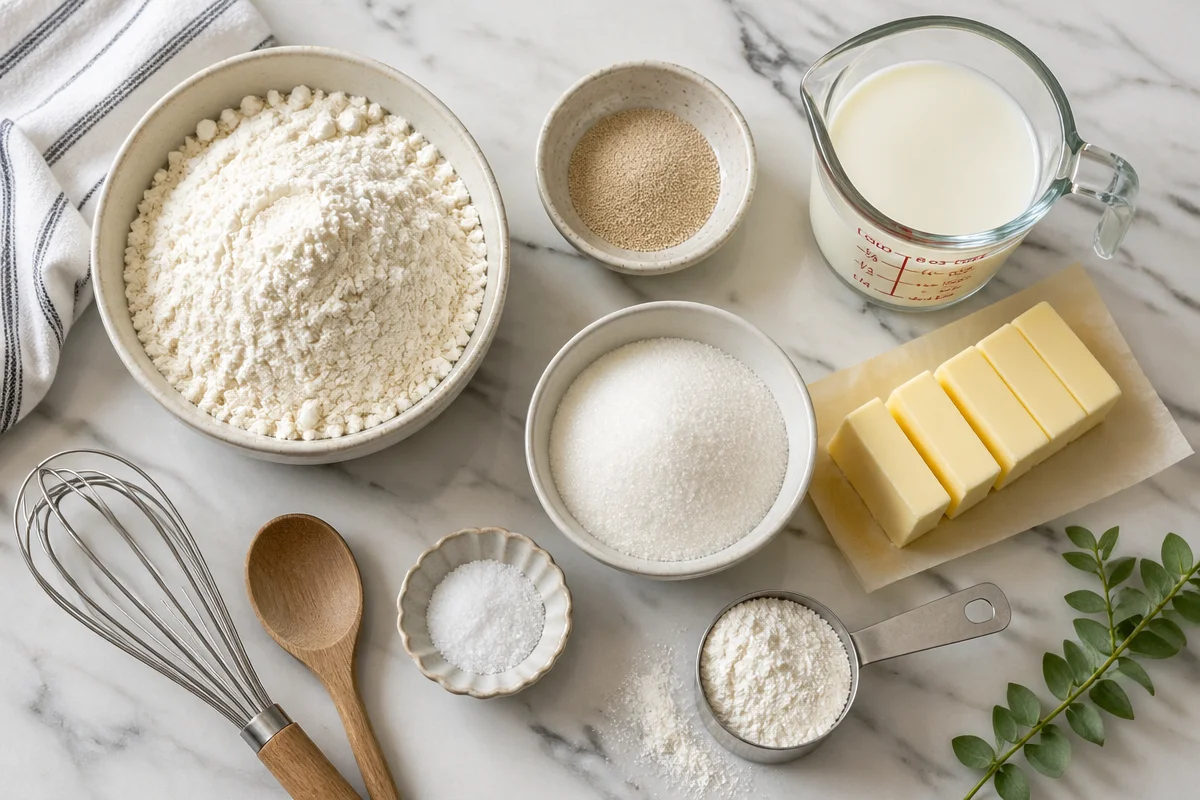
What you will need before you start
Nothing fancy, just the basics you probably have already:
- Kitchen scale if possible
- Rolling pin
- Bench scraper or a sturdy spatula
- Plastic wrap or a reusable wrap
- Baking sheets and parchment
- Instant read thermometer is helpful but optional
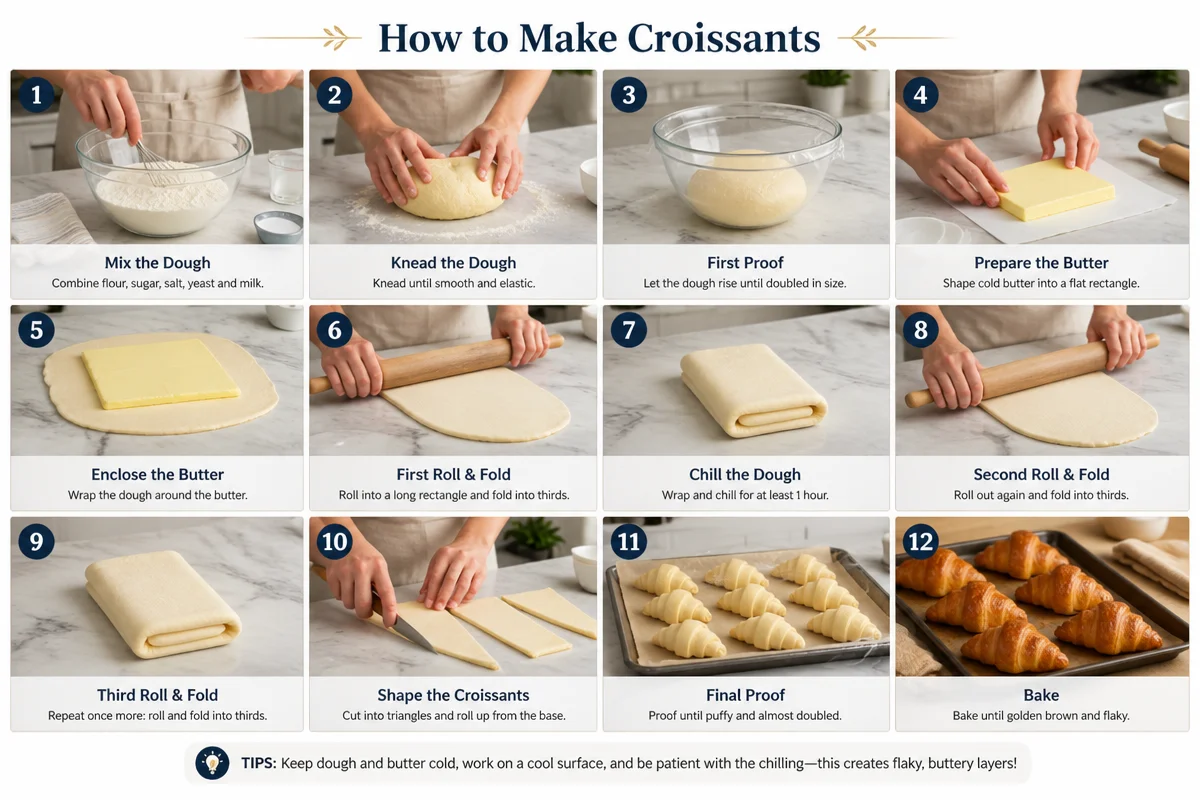
Now the core steps, simplified:
1) Make the dough
You mix flour, yeast, sugar, salt, milk, and a little butter. You are not trying to knead forever. You just want it smooth enough to hold together. Then it rests in the fridge so it is easier to roll.
2) Make the butter block
This sounds intense, but it is just butter shaped into a neat rectangle. I like to smack it into shape between sheets of parchment. The key is that the butter should be cool and flexible, not rock hard and not greasy soft.
3) Lock in the butter
You roll the dough into a larger rectangle and wrap it around the butter block like a letter. You want butter fully enclosed, with no big gaps.
4) Do the folds
You roll the dough out, then fold it, then chill it, then repeat. Think of it like building a stack of thin layers. If you keep it cold, you keep those layers clean.
5) Shape the croissants
You roll the dough into a big sheet, cut long triangles, stretch them gently, then roll them up. I always tuck the tip underneath so they do not unroll in the oven.
6) Proof and bake
Proofing is the final rise. The croissants should look puffy and a little jiggly, like they have air inside. Then you egg wash and bake until deeply golden.
When I am in the middle of folding and chilling, I like prepping something easy for later so I do not end up ordering takeout. If you want a low effort dinner, try these air fryer chicken legs because they cook while you rest your brain from pastry math.
And because you asked for the SEO table placement, here it is, quick and helpful:
Understand common mistakes and how to avoid them
I have made every croissant mistake at least once, so let me save you some frustration. The good news is that most issues are fixable, or at least preventable next time.
The most common croissant problems
Butter leaking out
Usually the butter got too warm and started melting into the dough before baking. Chill more between steps. If your kitchen is warm, take breaks and use the fridge like it is your best friend.
Dough tearing while rolling
This happens if the dough is too cold or you are pushing too hard. Let it sit for 5 to 10 minutes on the counter, then roll gently. Also, do not use a ton of flour, because excess flour can mess with sealing and layers.
Croissants look bready, not flaky
That can mean the butter layers got squished or absorbed. Keep the butter at the right texture, and do not skip chilling. Also, proofing matters. Underproofed croissants bake up dense.
Flat croissants
Often a proofing issue, or the yeast was old, or the dough got too warm and the layers blended together. Aim for a soft wobble before baking.
Burning on the outside but raw inside
Your oven might run hot. Use an oven thermometer if you can. If they are browning too fast, lower the heat slightly and extend the bake.
“I thought homemade croissants were out of my league, but keeping the dough cold and following the folds made it click. Mine were actually flaky, and my family hovered around the oven like it was a movie.”
If your brain needs a reset after troubleshooting, I swear by a calm drink break. Something simple like this autumn herbal tea keeps the vibe relaxed while the dough chills.
Discover tips for perfecting croissant flavor and texture
Once you can get a decent croissant, the next level is making them taste like the ones you obsess over at a good bakery. This is where the little choices matter.
My personal tips that make a big difference
Use good butter. This is not the moment for the cheapest option. A richer butter gives a cleaner flavor and better layers.
Salt is your friend. Do not reduce the salt too much. Croissants need it to taste like more than just “bread and butter.”
Let the dough rest when it fights you. If the dough keeps shrinking back when you roll it, it needs time to relax. Ten minutes can save you so much grief.
Go for deep golden brown. Pale croissants taste flat. That darker, even color brings out the buttery, toasty flavor.
Cool them a bit before eating. I know, rude. But 10 minutes of cooling helps the inside set so it is honeycombed instead of gummy.
And yes, the claire saffitz croissant recipe is absolutely worth doing over two days if that is what it takes. I actually prefer it because the overnight chill makes the dough easier to handle, and the flavor gets a little more developed too.
Learn about variations and creative filling ideas
Once you have the basic shape down, you can play. I like to keep a few plain ones because nothing beats a classic butter croissant, but fillings are where the fun sneaks in.
Here are filling ideas that feel special without being fussy:
- Chocolate batons or good chocolate sticks for pain au chocolat vibes
- Almond cream for that bakery almond croissant feeling
- Ham and cheese for a savory, lunchy version
- Jam plus cream cheese for a brunch treat
- Cinnamon sugar for a lightly sweet morning pastry
If you are doing a brunch spread, croissants plus a pitcher drink is a whole mood. This authentic Spanish sangria is obviously more for the afternoon version of brunch, but I am not here to judge your weekend plans.
One note on fillings: do not overstuff. It feels tempting, but too much filling can burst out and glue the layers together. A little goes a long way.
And if you want to keep practicing, repeat the same dough a couple times before going wild. The more times you do the folds, the more your hands learn the “feel” of it. That is the real secret of getting comfortable with the claire saffitz croissant recipe.
Common Questions
Can I make the dough ahead of time?
Yes. In fact, I prefer it. You can chill the dough overnight between steps so you are not doing everything in one long day.
What if I do not have European style butter?
Use the best butter you can find. Even regular butter works if you keep it cool and handle it gently.
How do I know when they are proofed enough?
They should look puffy and feel airy. If you gently shake the tray, they should wobble a little, not sit stiff.
Why are my layers not obvious inside?
Usually the butter got too warm during rolling, or the croissants were underproofed. Chill more during folds and give them enough time to rise before baking.
Can I freeze croissants?
Yes. Freeze them shaped but unbaked, then thaw overnight in the fridge and proof before baking. Or freeze baked croissants and rewarm in the oven until crisp.
A warm, flaky finish (you have got this)
If you have been craving a weekend baking project that feels truly rewarding, the claire saffitz croissant recipe is the one I keep coming back to. Stay patient with the chilling, treat butter temperature like the main character, and do not panic if your first batch is not perfect. For extra reading that genuinely helped me, I liked this guide on How to make stunning croissants at home – The Salt Lake Tribune, and I also bookmarked Croissants Recipe (with Video) – NYT Cooking for another solid perspective. Now go clear some fridge space, put on something cozy, and bake yourself the kind of treat that makes your kitchen smell like a real bakery. 
Classic Croissants

Perfectly flaky and buttery croissants made at home with step-by-step guidance.
- Prep Time: 60 minutes
- Cook Time: 25 minutes
- Total Time: 85 minutes
- Yield: 12 croissants 1x
- Category: Pastry
- Method: Baking
- Cuisine: French
- Diet: Vegetarian
Ingredients
- 4 cups all-purpose flour
- 1 cup whole milk
- 1/4 cup granulated sugar
- 2 teaspoons active dry yeast
- 1 1/2 teaspoons salt
- 1 1/2 cups European style butter
- 1 egg (for egg wash)
Instructions
- Mix flour, yeast, sugar, salt, milk, and a little butter until smooth and rest in the fridge.
- Shape the butter into a rectangle between parchment sheets.
- Roll the dough into a rectangle and wrap the butter block inside.
- Fold the dough, chill, and repeat to create layers.
- Cut the dough into triangles for shaping croissants.
- Proof the shaped croissants until puffy, then egg wash and bake until golden.
Notes
For best results, keep your butter cool and chill between steps to maintain flaky layers.
Nutrition
- Serving Size: 1 croissant
- Calories: 300
- Sugar: 4g
- Sodium: 250mg
- Fat: 20g
- Saturated Fat: 12g
- Unsaturated Fat: 6g
- Trans Fat: 0g
- Carbohydrates: 32g
- Fiber: 1g
- Protein: 7g
- Cholesterol: 40mg
Keywords: croissants, pastry, baking, French pastries