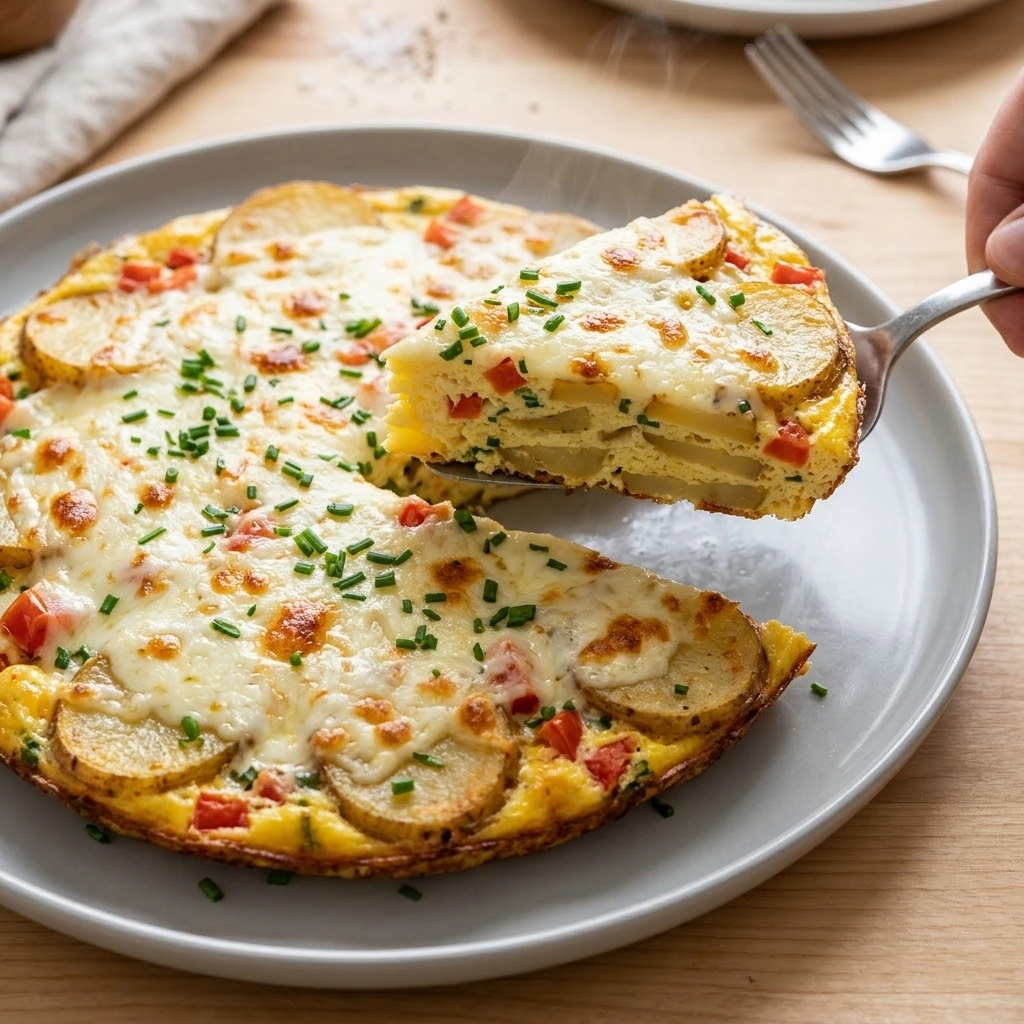
There are certain kitchen staples that quietly rescue weeknight dinners and lazy weekend lunches time and time again. When the fridge looks bare and you have zero energy for a complicated recipe, a humble bag of potatoes and a carton of eggs can still deliver something extraordinary. This One-Skillet Cheesy Potato and Egg Frittata takes everyday ingredients and turns them into a golden, custardy, cheese-blanketed meal that tastes like it came straight out of a cozy neighborhood bistro.
Unlike a traditional Spanish tortilla that requires deep-frying pounds of potatoes in cups of olive oil, or a classic French omelet that demands split-second wrist action, this skillet recipe is wonderfully forgiving. You start by pan-frying thin rounds of potato seasoned with a pinch of salt and smoky-hot paprika right in your skillet. Once those slices turn tender and lightly golden, you pour over a frothy mixture of beaten eggs, rich cream, juicy diced tomatoes, and fresh green chives. A quick flip with the help of a dinner plate lets both sides turn golden brown before a generous layer of shredded mozzarella melts over the top under a covered lid.
Whether you serve it warm from the stove for a hearty family breakfast, slice it into wedges for a quick midday lunch, or pair it with a crisp green salad for dinner, this dish checks every box: budget-friendly, single-pan, deeply comforting, and ready in under thirty minutes.
Why This Skillet Potato and Egg Recipe Works Every Single Time
Many home cooks have tried making potato omelets or frittatas only to end up with one of two problems: raw, crunchy potatoes trapped inside overcooked eggs, or a dry, rubbery egg base that lacks flavor. This recipe solves both issues through a few smart, simple techniques built right into the workflow.
First, seasoning and pan-frying the potatoes first builds the flavor foundation of the entire dish. Instead of boiling the potatoes in plain water or tossing them raw into the eggs, you cook thin slices directly in hot oil with salt and hot paprika. As the potatoes sizzle, they absorb the spiced oil and develop a delicate golden crust while turning fork-tender inside. Because they stay right in the bottom of the pan, every drop of that paprika-infused oil seasons the eggs that follow.
Second, whisking heavy cream into frothy eggs transforms the texture. Beating four whole eggs thoroughly with a fork introduces tiny air bubbles that help the mixture puff up as it heats. Stirring in 200 grams of cream (or table cream) enriches the egg proteins so they set into a tender, velvety custard rather than a tough sponge.
Third, cooking covered over low heat—and pausing the burner between steps—gives you total temperature control. Turning off the stove right after frying the potatoes prevents the eggs from scorching the instant they hit the pan. Cooking on low with a lid traps gentle steam, ensuring the center sets evenly before you flip.
Ingredient Breakdown and Easy Swaps
You only need a handful of fresh, accessible ingredients to bring this skillet meal together. Below is a complete breakdown of every component, the exact quantity used in the recipe, and what it contributes to the finished dish.
| Ingredient | Exact Amount | Culinary Role in the Dish | Easy Substitution Options |
| Potatoes | 3 medium potatoes, thinly sliced | Forms the hearty, golden-brown base and gives the frittata structure | Yukon Gold, red potatoes, or Russet potatoes sliced to uniform 1/8-inch rounds |
| Cooking Oil | Enough to coat the skillet base | Transfers heat evenly and crisps the potato edges | Olive oil, avocado oil, sunflower oil, or a mix of oil and butter |
| Hot Paprika | To taste (about 1/2 to 1 tsp) | Adds warm color, subtle heat, and smoky depth to the potatoes | Sweet paprika, smoked Spanish pimentón, or a pinch of cayenne pepper |
| Eggs | 4 large whole eggs | Binds the ingredients together and creates a fluffy, soufflé-like lift | 4 pasture-raised or standard large eggs at room temperature |
| Cream | 200 g (approx. 3/4 cup + 1 tbsp) | Delivers a rich, custardy interior and keeps the eggs moist | Heavy whipping cream, Brazilian creme de leite, table cream, or Crème Fraîche |
| Tomato | 1 medium tomato, finely diced | Provides bursts of bright acidity and juiciness to cut through the richness | Halved cherry tomatoes, Roma tomatoes (seeded), or roasted red peppers |
| Fresh Chives | 2 to 3 tbsp, finely chopped | Brings a mild, fresh onion aroma and vibrant green color | Finely sliced green onion tops (scallions) or fresh flat-leaf parsley |
| Salt & Black Pepper | 1 pinch salt (potatoes) + 1/2 tsp salt & 1 pinch pepper (eggs) | Enhances natural savory flavors across both layers | Sea salt, kosher salt, and freshly cracked black pepper |
| Mozzarella Cheese | 1 to 1.5 cups shredded (or sliced) | Melts into a gooey, savory blanket over the crispy flipped potatoes | Provolone, Monterey Jack, mild cheddar, or Gouda cheese |
Choosing the Best Potatoes for Pan-Frying
While almost any potato will work in a pinch, waxy or all-purpose varieties like Yukon Gold hold their round shape best when sliced thin and pan-fried. They have just enough natural starch to turn creamy on the inside while developing a golden exterior without falling apart when stirred. Whatever variety you choose, aim to slice the rounds evenly—about 3 millimeters (1/8 inch) thick—so every piece finishes cooking at the exact same time.
Why Cream Makes All the Difference
If you have only ever added a splash of milk or water to your scrambled eggs and omelets, using a full 200 grams of cream (roughly one standard carton of creme de leite or three-quarters of a cup of heavy cream) might sound indulgent. Once you taste the result, however, you will never go back. The higher fat content coats the egg proteins, preventing them from bonding too tightly as they coagulate over the heat. The result is a sliceable yet pillowy texture that stays tender even after cooling slightly on the plate.
Step-by-Step Guide to Making the Perfect Skillet Potato and Egg Frittata
Follow these six straightforward stages to recreate the exact texture, color, and flavor at home.
Step 1: Slice, Season, and Pan-Fry the Potatoes
Start by peeling your three medium potatoes and cutting them into thin, even rounds. Heat a generous coating of oil in a large non-stick skillet over medium heat. Once the oil is hot, add the potato slices and spread them across the pan.
Sprinkle a pinch of salt and a dusting of hot paprika directly over the potatoes. Use a heatproof spatula to toss and turn the slices so the salt and paprika coat every single piece evenly. As the paprika hits the warm oil, it releases an incredible aroma and tints the potatoes a warm golden-orange hue. Continue frying, turning occasionally with your spatula, until the potatoes are fork-tender and lightly golden on both sides. Once they reach a soft, uniform golden brown, turn off the heat and arrange the potatoes in an even layer across the bottom of the skillet.

Step 2: Whisk the Eggs for Maximum Fluffiness
While the potatoes rest in the warm skillet, crack four whole eggs into a medium mixing bowl. Using a fork or wire whisk, beat the eggs vigorously for 45 to 60 seconds. You want the yolks and whites to be completely unified and the surface to look pale yellow and frothy with bubbles. Taking an extra half-minute to aerate the eggs here is the secret to a light, spongy bite later.
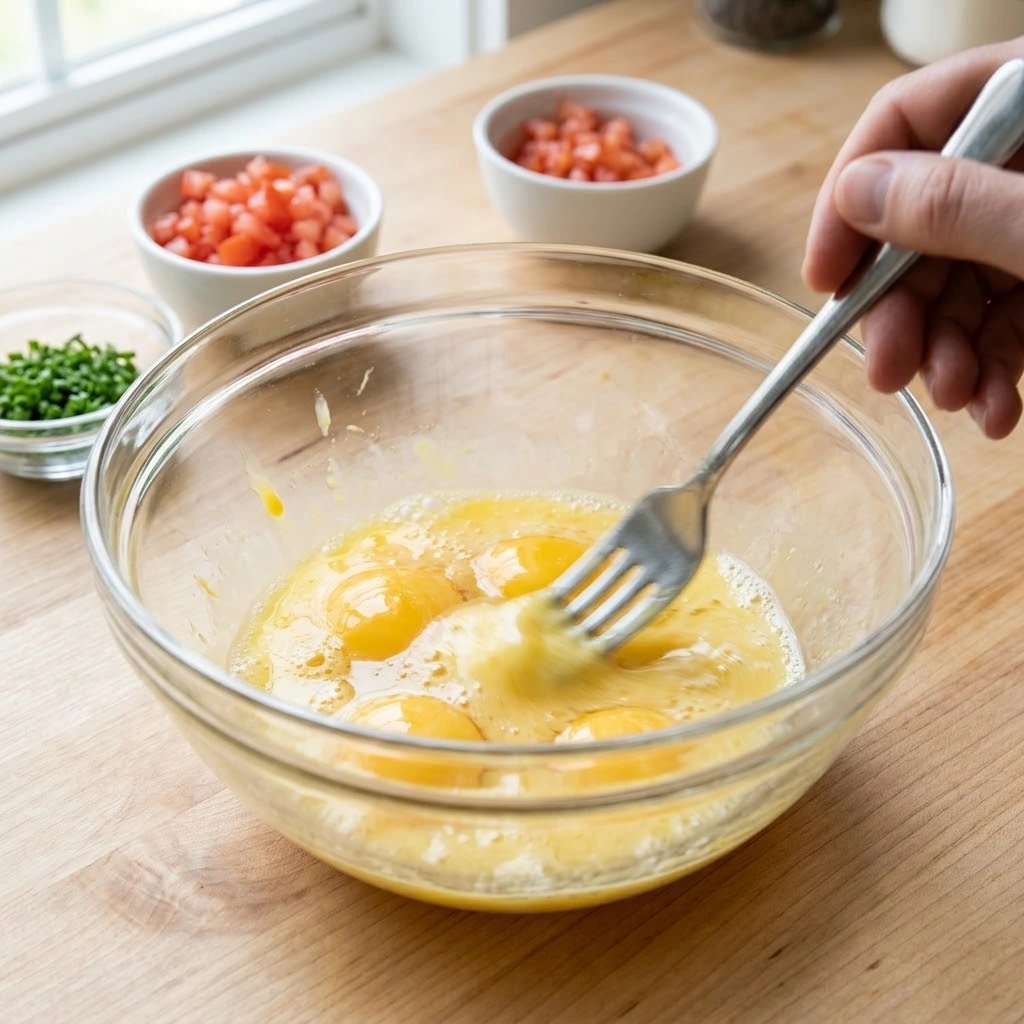
Step 3: Build the Creamy Vegetable Custard
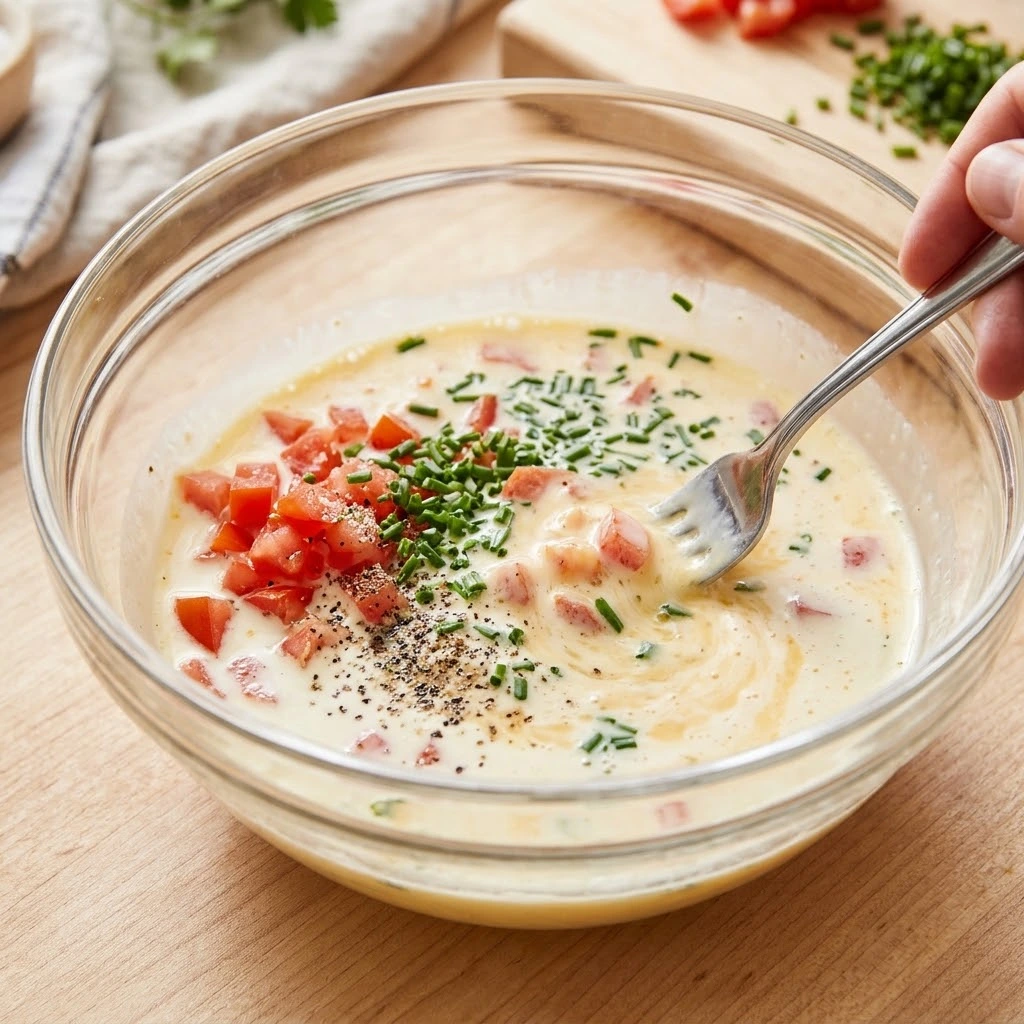
To your bowl of frothy beaten eggs, pour in the 200 grams of heavy cream (or table cream). Add the diced tomato and the chopped fresh chives. Season the mixture with one pinch of black pepper and half a teaspoon of salt.
Stir everything together thoroughly with your fork until the cream is seamlessly blended into the eggs and the diced tomatoes and green chives are suspended evenly throughout the liquid. The mixture will look creamy, colorful, and well-seasoned.
Step 4: Pour, Cover, and Cook Over Low Heat
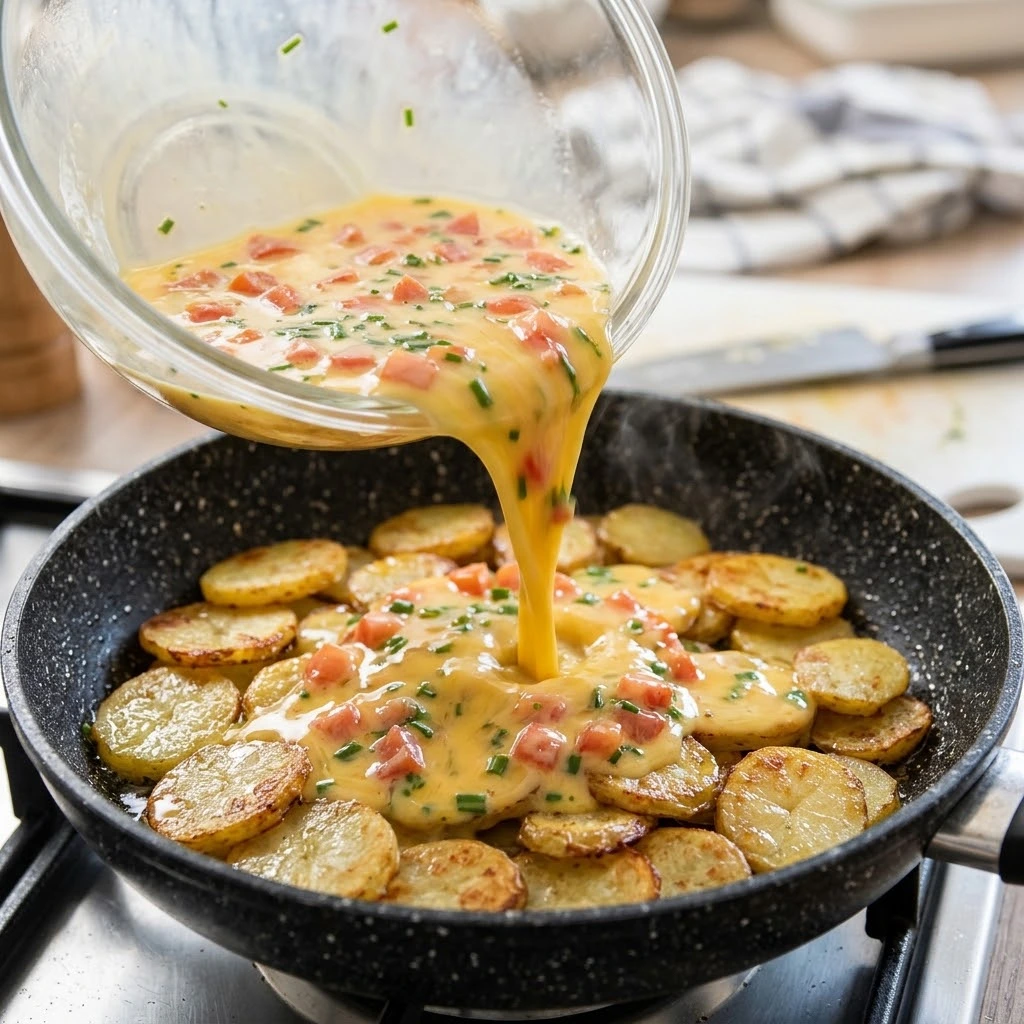
Bring your bowl over to the skillet of reserved golden potatoes. Carefully pour the egg and cream mixture over the potatoes, making sure it flows into every corner and covers the slices completely. Use your spatula to gently nudge the tomatoes and chives so they are distributed evenly across the surface.
Now, turn the burner back on to low heat. Place a tight-fitting lid over the skillet and let the frittata cook gently for several minutes. Keeping the heat low ensures the bottom does not burn while the trapped steam cooks the upper layer of eggs until set and puffy.
Step 5: Flip Using the Plate Method
Once the top of the egg mixture looks set and the edges pull cleanly away from the sides of the non-stick pan, turn off the burner. Take a flat dinner plate that is slightly wider than the rim of your skillet and place it upside down over the pan.
With one hand firmly holding the skillet handle and the other hand pressing flat against the center of the plate, smoothly invert the pan so the frittata drops onto the plate. Carefully slide the frittata from the plate back into the skillet so the golden-brown potato layer is now facing up and the uncooked top side is resting on the pan surface. Use your spatula to tuck the edges neatly into place so the underside can brown evenly.
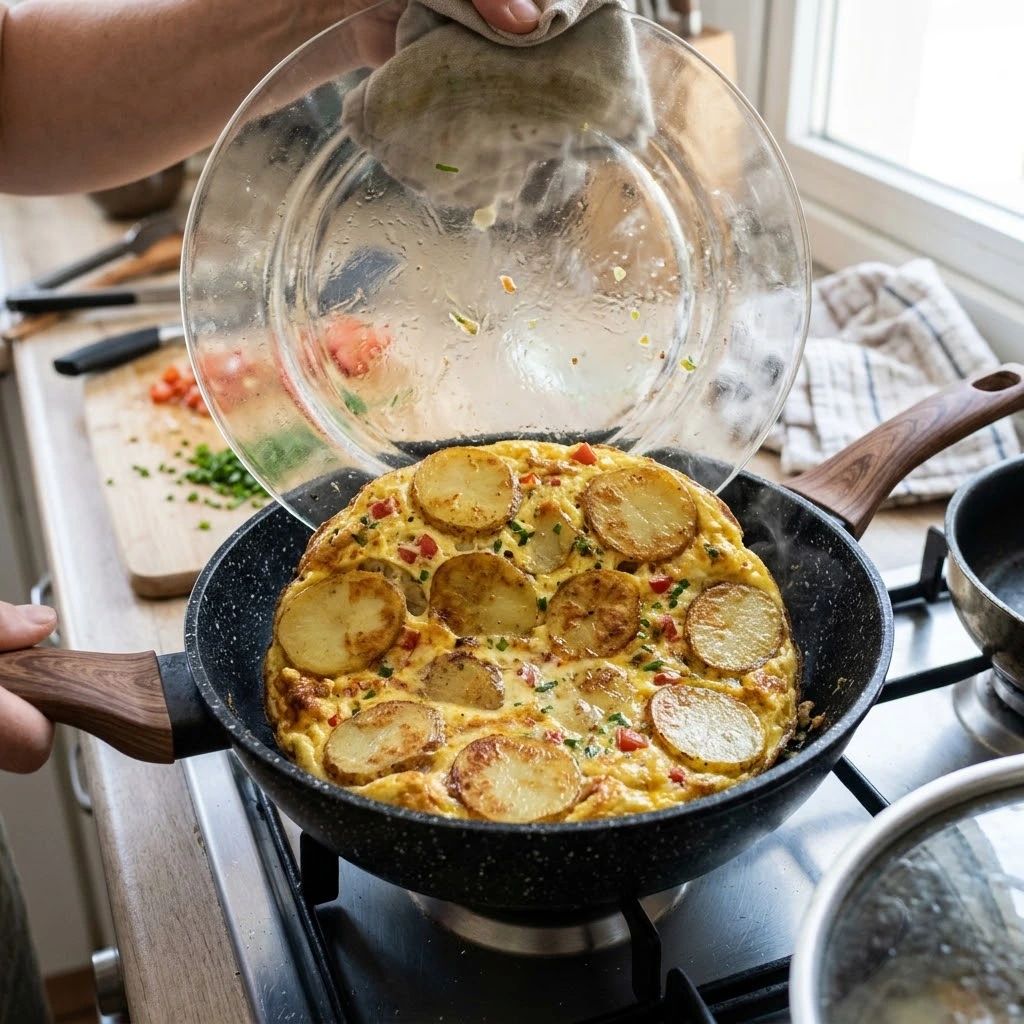
Step 6: Top with Mozzarella and Melt
Immediately scatter a generous layer of shredded mozzarella cheese (or lay down mozzarella slices) across the warm, golden potato top, covering the surface from edge to edge. Place the lid back on the skillet, turn the heat to low once more, and let it cook for just 2 to 3 minutes. The residual heat and trapped steam will melt the mozzarella into a bubbly, glossy blanket while finishing the bottom crust.
Once the cheese is completely melted, turn off the heat, use a spatula to loosen the edges, and slide the finished frittata onto a large serving plate. Cut into triangular wedges like a pie and serve warm.
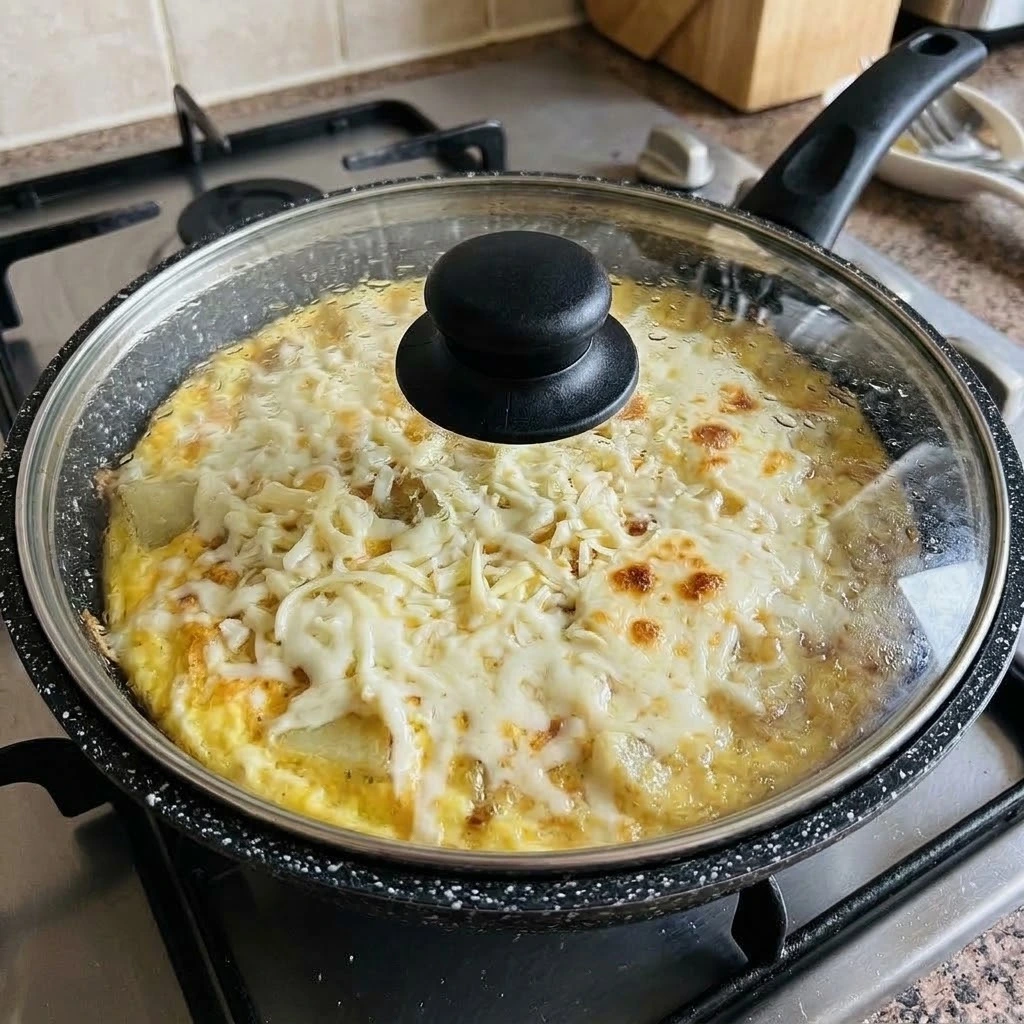
Five Pro Tips for Foolproof Results
- Use a reliable non-stick skillet with a matching lid: Because this recipe relies on a clean plate flip and gentle steam to cook the eggs and melt the cheese, a 10-inch or 12-inch non-stick frying pan with a domed glass lid makes the entire process effortless.
- Drain excess juice from your diced tomatoes: If your tomato is extra ripe and watery, scoop out the seed pulp before dicing or let the diced pieces sit on a paper towel for two minutes. Removing excess liquid keeps the egg custard thick and prevents watery pockets.
- Never pour eggs into a roaring-hot pan: Turning the burner off after frying the potatoes is a small detail that makes a huge difference. It lets the pan cool just enough so the eggs set gently into a smooth custard instead of scrambling on contact.
- Choose a plate with a flat rim for flipping: A wide, flat charger or pizza plate slides much more cleanly back into the skillet than a deep-rimmed soup plate.
- Let it rest for two minutes before slicing: When you first slide the frittata onto the serving platter, the melted mozzarella and creamy egg center are piping hot. Waiting just two minutes allows the custard to settle so every wedge holds its tall, layered shape when lifted with a spatula.
Serving Suggestions, Storage, and Reheating
Because this dish already packs carbohydrates from the potatoes, protein from the eggs, and richness from the cream and mozzarella, it needs very little on the side to feel like a complete meal.
- For a fresh lunch or light dinner: Pair a warm wedge with a crisp arugula or mixed greens salad dressed simply with lemon juice and olive oil. The peppery greens and bright citrus cut right through the creamy cheese.
- For a hearty weekend brunch: Serve alongside toasted crusty sourdough bread, sliced avocado, and roasted cherry tomatoes.
- For meal prep and leftovers: Allow any remaining slices to cool completely, then store them in an airtight container in the refrigerator for up to 3 days. To reheat without drying out the eggs, place a slice in a covered non-stick skillet over low heat for 3 to 4 minutes with a teaspoon of water in the corner of the pan to create gentle steam, or warm it in the microwave at 50% power in 30-second bursts.